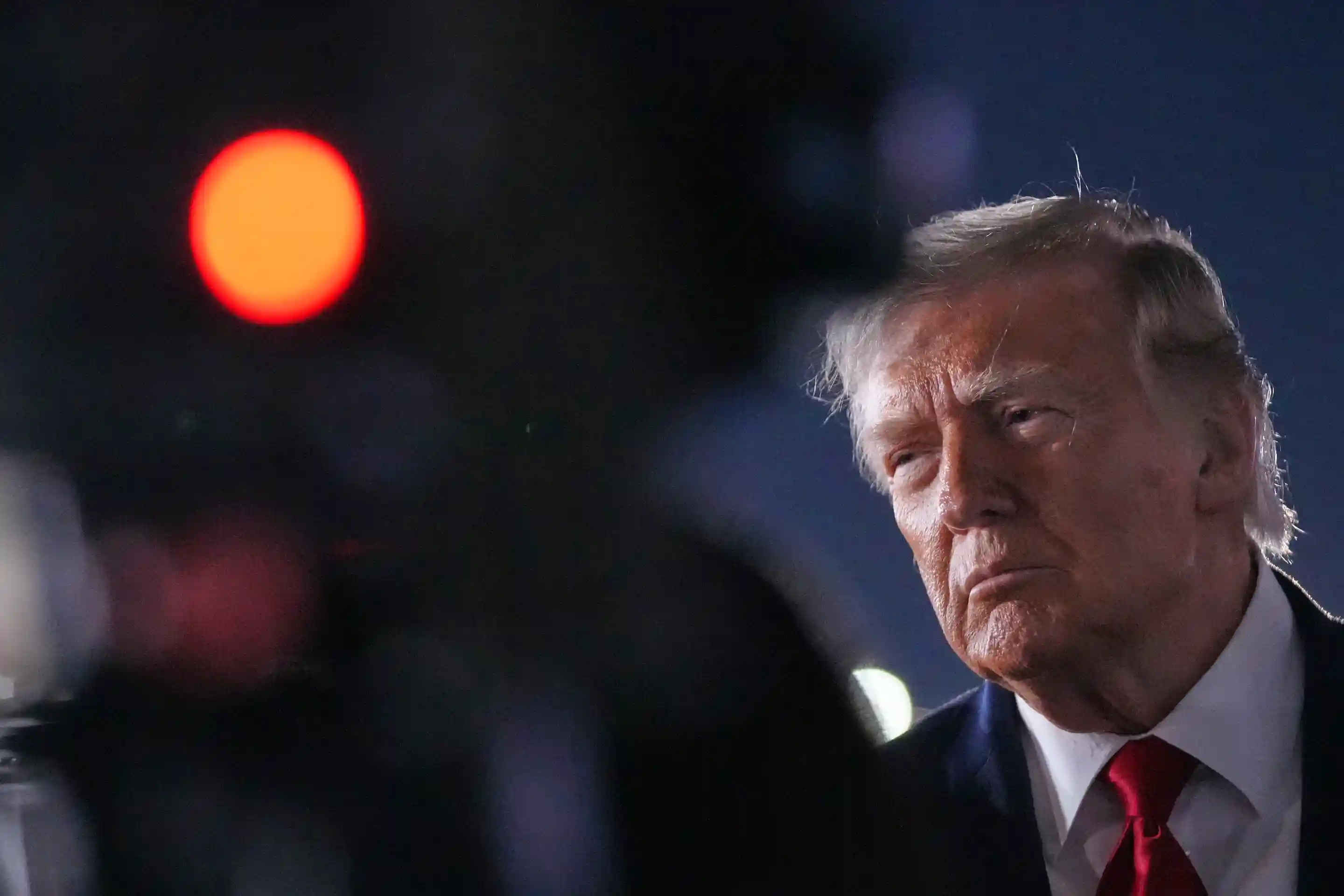
In a bold escalation that’s sending ripples through the international sports community, the World Anti-Doping Agency is floating the idea of rewriting its own rules to potentially keep President Donald Trump and other top U.S. government figures out of the 2028 Los Angeles Olympics—and maybe even this summer’s FIFA World Cup on American soil. The move stems from a long-simmering money dispute: the United States has flat-out refused to pay its annual dues to WADA for years now, and the agency is clearly tired of waiting.
At the heart of it all is a fight over fairness in sports. The U.S. government, backed by both Democrats and Republicans, has been holding back payments since 2023 as a form of protest. They’re furious about how WADA has handled some high-profile doping cases, especially one involving Chinese swimmers who tested positive but were still allowed to compete. American officials want real accountability and transparency before they hand over another dime—roughly $3.7 million owed from last year plus another $3.6 million from 2024.
The proposal is set to be discussed at WADA’s executive committee meeting next Tuesday. It’s not brand-new; something similar was floated back in 2024, but the U.S. managed to get it shot down at the time. Things have changed, though. America no longer has a seat on that powerful committee, which has opened the door for this fresh push. According to insiders who’ve seen the agenda items (shared through emails between WADA and European sports leaders), the idea is to create new sanctions for any country that skips its payments after a certain deadline—January 31 of the year following the bill.
If it passes, the penalties would come in three levels, with the harshest ones hitting government reps hard. We’re talking exclusion from big-ticket events like World Championships, the Olympics, and Paralympics. That could mean Trump, Vice President J.D. Vance, members of Congress, and other officials might be told they’re not welcome at the LA Games happening right in their own backyard. It’s a dramatic threat, especially since Congress just greenlit hundreds of millions for security and logistics to make both the World Cup and LA Olympics run smoothly.
Enforcement Questions and Criticism
But here’s where things get tricky—and a bit absurd, according to critics. How exactly would WADA enforce something like this? A Swiss-based organization with a budget around $57.5 million trying to block the leader of the free world from an event on U.S. soil? Former ONDCP director Rahul Gupta, who sat on WADA’s executive committee just a couple of years ago and helped kill the earlier version of this plan, didn’t hold back. “I have never heard of a $50-million-budget Swiss foundation being able to enforce a rule to, for example, prevent the United States president from going anywhere,” he told reporters. “And the next question you have to ask is: How are you going to enforce it? Are they going to post a red notice from Interpol? It’s ludicrous. It’s clear they have not thought this through.”
Sara Carter, the current head of the U.S. Office of National Drug Control Policy, echoed that tough stance. “In spite of WADA’s increasing threats, we continue to stand firm in our demand for accountability and transparency from WADA to ensure fair competition in sport,” she said. The U.S. isn’t backing down; they want independent audits of WADA’s processes before any money flows again.
WADA's Response and Timing Concerns
WADA, for its part, is pushing back hard on the narrative. Spokesman James Fitzgerald called the whole story “entirely misleading” in a release that dropped right after details leaked. He pointed out that talks about what to do with governments who withhold funding have been going on since 2020—not just aimed at the U.S. And crucially, any new rule wouldn’t apply retroactively. That means the 2026 World Cup (co-hosted by the U.S., Canada, and Mexico), the 2028 LA Olympics, and even the 2034 Salt Lake City Games might dodge the bullet entirely. The next big decision-making meeting isn’t until November, and Fitzgerald stressed there’s simply no time to roll this out for events happening this summer or soon after.
Still, European officials involved in WADA’s inner circle got a different vibe last month. In responses to their questions about timing, WADA hinted it could fast-track things if needed—maybe even through a quick vote by circular email or an emergency board session. The draft document making the rounds doesn’t even mention “retroactivity,” which has left some scratching their heads about exactly how this would play out.
Roots of the Dispute
This whole mess goes back further than just unpaid bills. America’s distrust of the global anti-doping system has been building for years. It started with the Russian scandal tied to the 2014 Sochi Olympics, where state-sponsored doping raised huge red flags. Then came the 2024 bombshell: 23 Chinese swimmers tested positive for a banned heart medication, but WADA bought the explanation that kitchen contamination at their hotel was to blame. Some of those athletes went on to compete in Paris. Both the Trump and Biden administrations, along with Congress, saw that as a failure and hit pause on payments until WADA agrees to outside audits.
WADA defends itself by saying its existing checks are solid and that half its funding already comes from the International Olympic Committee anyway. The other half relies on governments worldwide, with contributions scaled to each country’s Olympic team size. The U.S. has always been one of the biggest payers, so its absence stings. “This initiative is aimed at better protecting WADA’s funding so that it can deliver on its mission to protect clean sport,” Fitzgerald explained. “If WADA’s funding is cut, it is ultimately athletes who will suffer.” He noted that athletes on WADA’s own boards have been vocal in supporting the sanctions idea.
Nobody from the IOC, FIFA, or the U.S. Olympic and Paralympic Committee has weighed in publicly yet on how—or even if—they’d actually enforce a ban on Trump and company. It all feels mostly symbolic right now. After all, stopping a sitting president from showing up at an event in his own country raises massive legal and practical questions no one seems ready to answer.
Broader Implications for Clean Sport
At the end of the day, this isn’t just about dollars and cents or who gets a VIP pass to the Olympics. It’s exposing deep cracks in the trust that’s supposed to keep global sports clean. Athletes around the world train their whole lives for these moments, and they deserve a level playing field free from politics or half-measures on doping. Whether WADA’s latest threat actually gains traction or fizzles out like the 2024 version remains to be seen. But one thing’s clear: the U.S. isn’t blinking, and the clock is ticking on both sides. Sports fans everywhere will be watching to see if this funding standoff ends up casting a shadow over some of the biggest events on the calendar—or if cooler heads finally prevail before the games begin.
Next article
No next article

Brandon Williams
Brandon Williams is a sports journalist with extensive experience covering NFL, NBA, MLB, and college athletics. Known for his in-depth player profiles and game analysis, he brings both statistical insight and compelling storytelling to sports coverage.