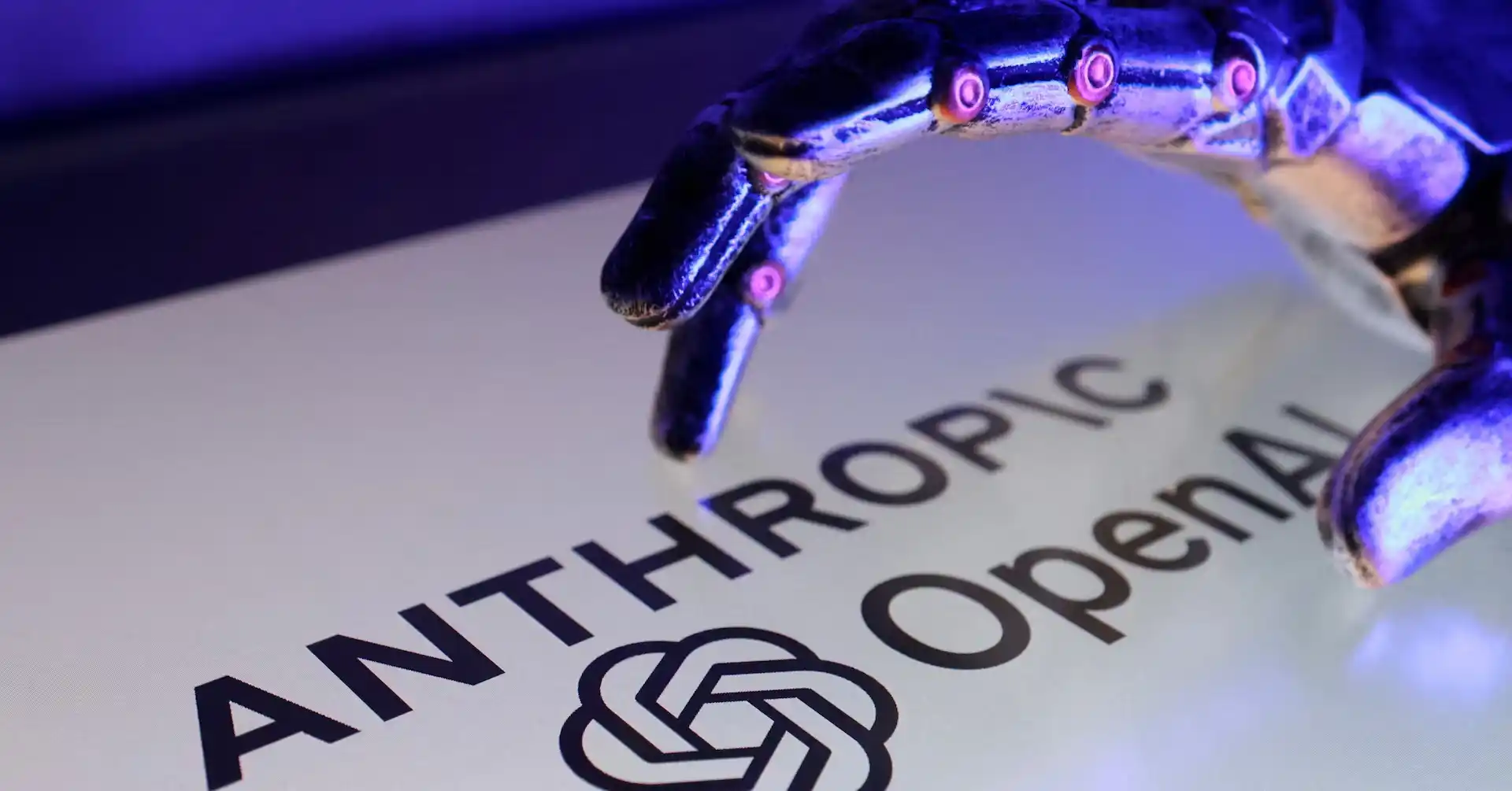
This week, the markets on Wall Street and in Europe fell a lot. Shares in data analytics, software, and professional services companies fell sharply, and a lot of people are blaming Anthropic's new AI improvements for the drop. On Tuesday, we saw some bad drops. Companies that were doing well during the AI boom suddenly looked like they were going down fast. People who trade and analyze stocks are talking a lot about how this one move by the AI startup could mean big changes for industries that thought they were safe or even going to make a lot of money from AI.
Let's go back a bit. Anthropic, the San Francisco-based AI company that has been making waves with its Claude chatbot, released new plug-ins for its "Claude Cowork" agent last Friday. These aren't just cool extras; they're meant to make a lot of work easier in areas like sales, marketing, legal work, and especially data analysis. Think about an AI that can read legal documents, do math for reports, or even write marketing plans without anyone having to keep an eye on it all the time. People in these fields thought for a long time that AI would be their friend and help them work faster and smarter. But now it looks like the technology might take their jobs or at least cut into their profits a lot.
Thomson Reuters is a large company in Toronto that owns the Westlaw legal database. To be honest, it is also the parent company of Reuters News. Their stock dropped about 18% on Tuesday, which would be the biggest drop in one day ever and the lowest close since mid-2021 if it stays that way. They've lost a lot of money this year, 33%, on top of the 22% they lost last year. Mike Archibald, a portfolio manager at AGF Investments in Toronto, was right on the money when he said, "I think Anthropic came out with some plug-ins to tackle the legal space." It's clear that that's where Thomson Reuters makes a lot of money. The market doesn't always think about what it's going to do before it does it.He's right: the legal part makes them a lot of money, and if AI starts doing the hard work of case research or contract evaluations, why pay more for databases that people have put together?
They're not the only ones who are in pain. The stocks of RELX from the UK and Wolters Kluwer from the Netherlands, two big players in legal analytics, dropped by 14% and 13%, respectively. Since its peak last February, RELX has dropped by about half. Tuesday's drop was the worst since 1988. It's a clear sign that AI is shaking up even the most experienced people in Europe's software industry. Jonathan McMullan, an analyst at Schroders, put it best when he said, "The selling pressure in software and data analytics is a sign of a deeper structural debate that has been sped up today by Anthropic's legal automation tool challenging established players like RELX." As the "visibility premium" from the past fades away, investors are quickly changing the prices in these areas. AI is growing so quickly that it's hard to defend long-term valuations. This is especially true since AI tools let businesses do more with fewer employees, which threatens the traditional model of charging per software user.
This isn't just a legal problem; it also affects many other businesses that provide professional services. FactSet Research fell 10.5%, Morningstar fell 9%, and LegalZoom fell 19.7%. Companies like Experian, Sage Group, London Stock Exchange Group, and Pearson all lost between 6% and 12% in London. People are worried that AI won't help these businesses and will hurt them instead. It's like a chain reaction. Giuseppe Sersale, a fund manager at Anthilia, said, "AI is getting better at the programming and knowledge-based services that these business models are based on." For a while, this has put some parts of the sector under a lot of stress. It's not the cold, hard facts about any company's fundamentals that drive the bus here; it's fear.
Not even the biggest tech companies were safe. Most of the big U.S. companies went down: Nvidia went down 2.8%, Meta went down 2.1%, Microsoft went down 2.9%, and Oracle went down 3.4%. The S&P 500 fell 0.84% and the Nasdaq fell 1.43%, which affected the whole market. It's interesting because these are the companies that are leading the way in AI, but the drop in value shows that investors are worried about overvaluation or that the AI hype bubble is starting to lose some of its air.
Let's talk about advertising now, because they were also affected. Omnicom, which is based in New York, dropped 11.2%, and Publicis, which is the largest ad firm in France by market cap, dropped more than 9% right after their results came out. Publicis is spending about 900 million euros (about $1.06 billion) on acquisitions this year, mostly on AI technology and data assets. This means that they are trying to change. But the market didn't care. Pinterest (down 5.6%) and Snap (down 8.4%) are two other companies that depend on ads and felt the pain. What? AI is getting really good at making content, targeting ads, and even coming up with campaigns. Why spend a lot of money on agencies when a chatbot can make a marketing plan or look at consumer data faster and cheaper? It's the same plan to make things worse that we've seen in other places.
To understand why this is so hard right now, you need to look at the big picture. AI has been the best thing to put money into for the past few years. Stocks in anything even remotely related to it, like chips, cloud computing, and software, went through the roof. Companies that analyze data, like Thomson Reuters or RELX, were supposed to do well because AI needs data, right? They would give the gas. Professional services thought they could use AI to improve their services and charge more for better insights. But Anthropic's plug-ins change everything. Claude Cowork is more than just a tool; it can also work as an entry-level analyst, paralegal, or marketer. You won't need as many workers, software licenses, or database subscriptions if you automate those tasks. If AI lets one person do the work of five, the "per user" charging model that helped these companies grow could break down.
Investors are acting like they didn't see it coming, but the signs have been there all along. Last year, when OpenAI added plugins to ChatGPT and Google added features to Bard, we saw the same kind of nervousness. But Anthropic's focus on professional workflows like legal research, sales pipelines, and marketing automation goes straight to the heart of these industries that make billions of dollars. Morgan Stanley analysts, led by Toni Kaplan, wrote in a note that "Most of the investors we have spoken with recently are overwhelmingly bearish on TRI as the consensus opinion worries that the company will be unable to maintain the same level of growth within its legal segment given increased competition from specialized AI tools." On Thursday, Thomson Reuters will announce its profits, which will be a key moment. People will want to know how they are dealing with new AI competitors.
This isn't just a one-time thing; it's part of a larger trend in new services and products. The software business in Europe has been especially weak. RELX and Wolters Kluwer built empires on their own data and analytics. But if AI can get, combine, and analyze public data (or even licensed data) for a lot less money, their moats will dry up. We have seen this happen before. For example, Uber changed the way taxis work, and Netflix killed Blockbuster. AI could do the same thing to work in an office. Schroders' McMullan talks about how the "visibility premium" is going down. Investors used to pay more for these companies because their sales were steady, like clockwork subscriptions. With AI moving at lightning speed, trying to predict what will happen in five years feels like trying to guess lottery numbers.
The ads make you feel the same way. Publicis is spending a lot of money on AI purchases to stay ahead, but the market isn't so sure. Agencies may have to cut back or change direction if AI can make ads, find the right people to see them, and figure out ROI without human creatives. These are old-school Mad Men companies that are trying to go digital, but AI could make some jobs useless. Pinterest and Snap make money from ads. Their models break if marketers move money to AI solutions that promise better ROI with less spending.
Companies like Thomson Reuters might spend a lot of money on their own AI by teaming up with Anthropic or other companies that make AI, like OpenAI. But for investors, this is a wake-up call: the AI boom isn't helping everyone; it's hurting some. The selloff wiped out billions of dollars in market value. For instance, on Tuesday, Thomson Reuters lost more than $10 billion in value. These industries had the hardest time, even though broader indices went down.
Previous article
No previous article

Emily Patterson
Emily Patterson is a technology reporter covering Silicon Valley, artificial intelligence, cybersecurity, and digital innovation. With a computer science background from MIT, she translates complex tech developments into accessible stories for mainstream audiences.