If you live in the Caribbean or have family there, you probably know a lot about the new US visa rules that are making things very hard. It seems like someone turned on a switch overnight, and suddenly going to the US for a family visit, school, or even a brief holiday is like walking through a minefield. People don't understand how this all happened or what it implies for their next trip, which may be to Jamaica, which is always busy, or Antigua and Barbuda, which are tranquil.
The US has put a big "pause" button on immigration visas from 75 nations, and a lot of Caribbean places are stuck in the middle. It is destroying everything from long-awaited family reunions to students' dreams and tourists' vacations, and it is leaving a trail of rage and confusion.
Imagine that you are a Jamaican family that has been saving for years to bring grandma to Miami to live with you. You can possibly be a student from Saint Lucia who wishes to go to college in the US on a scholarship. These new restrictions are a pain in the neck for more than just filling out forms; they're also a pain in the neck in real life.
The US Department of State declared in January 2026 that this block on immigration visas would only apply to "high risk" countries. The goal is to make the border safer and make sure that new individuals don't rely too heavily on public services. But for folks from the Caribbean, it's striking home hard and putting plans that have been in the works for months or even years on wait.
Let's take a closer look at it
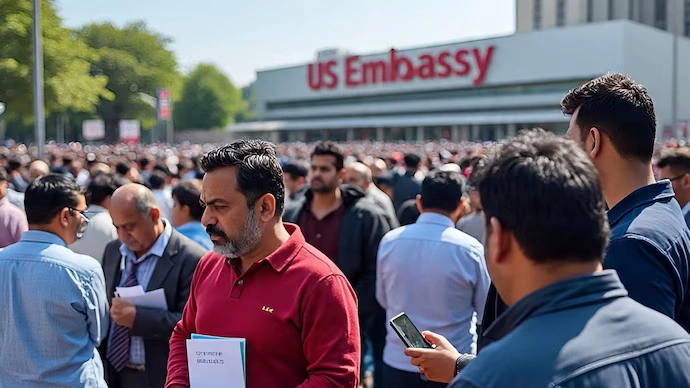
The US isn't fully closing the door; tourists (B-1/B-2), students (F or J), and anyone who want to work briefly can still receive nonimmigrant visas. Good luck getting through the procedure without having to do more work. The wait times are longer than a leisurely Sunday, and the interviews? They're becoming full-on interrogations.
The embassy is looking hard at your funds and looking for proof that you won't need to use any US social programs. Until someone can show that they aren't a problem, they treat everyone like they might be. Some people from some nations may need to produce even more proof, such as bank statements, work letters, property certificates, and more.
Why is the US putting a big freeze on visas for Caribbean people?
So, why did it end so quickly? That's what it all comes down to: the US government wants to make it harder to get into the country. In 75 nations, they worry that immigrants might use public resources like food stamps or healthcare too much.
Some of the biggest Caribbean countries, such Jamaica, Barbados, Antigua & Barbuda, Saint Lucia, and even Guatemala, were on the list. It wasn't because of a massive crime wave or anything else strange; it was based on numbers about how things had been in the past.
For example, Jamaica has close links to the United States. Florida and New York have a lot of Jamaican communities. Every year, Jamaicans who live in other countries pay billions of dollars back to Jamaica's economy. But if you're attempting to get a green card through family sponsorship, don't bother right now.
The stop doesn't affect people who already have their visas, but what about people who are applying for new ones? No one knows how long they will be on ice.
I chatted to a buddy from Barbados last week who was willing to pay for his brother to move there permanently. What now? Everything is going wrong. He stated, "It's like they don't see us as neighbors anymore." And he is correct.
These standards are similar to some of the stricter ones from previous administrations, but this time they are all about becoming "self-sufficient." The idea is to support immigrants who can take care of themselves straight immediately. In theory, it's fair, but in practice, it's stopping families that work hard and just want a chance at the American dream from receiving it.
But it's not easy on the nonimmigrant side either
You can still get a tourist visa to see a Broadway musical or go to Disney World, but be ready for a lot of questions. When it comes to "public charge" concerns, officers are exceedingly careful. If they suspect you might need support from the government, your application is dead.
This implies you need to present proof that you will go back after your vacation, including having strong ties to your home country, like a steady work or owning property. For students, it's about showing that you can pay for education without help from the US, either with your own money or with scholarships.
It's exhausting, and the wait times? Some embassies say they have a lot of work to do and that it could take months to finish it all.
The Bigger Bans: More Caribbean Islands Are Having Trouble with Security
But hold on, there's more. It's not just halting immigrants; other Caribbean countries have full travel bans because they are worried about safety. Antigua & Barbuda and Dominica are two instances.
These countries have citizenship-by-investment systems that let wealthy people from all over the world buy passports. Small islands get a lot of money from it, which they use to pay for schools, roads, and hospitals. But the US doesn't like it.
They believe that it makes background checks difficult because you can't be sure that someone genuinely possesses that passport. So, they've put partial suspensions on various sorts of visas, like the B-1/B-2 tourist and business visas and the F, M, and J student and exchange programs.
If you live in Antigua and wish to go to Atlanta for work to consummate a contract, your visa application can be turned back with requests for further information. Or a kid from Dominica who wants to go to Texas to learn how to be an engineer? They might have to wait a long time, or even worse, they might be turned down right away.
It's also causing people to quarrel. Caribbean leaders are hitting back, stating that their programs are vetted more carefully than a drum and that this is unjust stereotyping. A government official from Antigua told a local newspaper not too long ago, "These projects are good for our economies." "Stopping us hurts the little guy, not the bad guys."
And we shouldn't forget that this will impact how people move around. People who used to go to Miami to shop or see family are now looking at Canada or Europe instead. The UK gets more visa applications since it has connections to the Caribbean.
But it's not always easy to adjust your plans. Not everyone has the time, and flights could cost more. Caribbean tourism boards are likewise apprehensive. If fewer people can go to the US, Orlando, which depends on Caribbean tourism, would make less money.
The Real Cost: How These Changes Hurt Caribbean Economies and Societies
It's not just about visas; when you look at the wider picture, it's affecting the basic roots of life in the Caribbean. Just like close-knit families need money sent home from abroad to keep together, economies here need too.
That's money for school, medical expenditures, and launching small enterprises. Because there aren't as many immigration visas, fewer people can stay in the country for good. Over time, this could slow down those flows.
Families are away for longer lengths of time, and youngsters don't have any aunts or uncles. What about the stress in your mind? You can feel it.
It's like a punch to the gut for your social life. Island nations have long used migration to stay alive, whether it's to escape away from a lack of jobs, gain an education, or just construct a brighter future. Young people may feel stuck now that things are getting harder.
For example, thousands of Caribbean kids attend to school in the US every year. There are a lot of Caribbean students at Howard University and Florida International. But some people could give up on the concept of going to school in the US since it's increasingly difficult to secure a student visa.
They might prefer to go to school in Canada or the UK instead, where it seems safer.
Tourism is bad for both sides. People from the Caribbean love to go to the US for vacations, weddings, and medical care. For example, Florida's economy depends on people moving there. Think about cruises that stop in Miami and have people from the islands on board.
Those cash will stay put if getting a visa is harder. And back home, companies hurt when fewer family members can visit or give money. It's a bad cycle.
People in Barbados have written online about their concerns, including a wedding being pushed back because the groom's relatives couldn't secure visas or a student putting off enrolling due of delays. It's very sad.
And don't even get me started on how it affects my thoughts; the uncertainty makes me uncomfortable, especially when I'm with a small group of people I know.
Going Forward: Advice for persons who desire to go to the Caribbean Getting through the mess
But it's not all terrible news. What can you do if you're stuck in this? First of all, knowing things gives you power. You can get the most recent news from the US State Department's website or your local consulate.
Things could alter if there are changes in policy or conversations between countries. You need to be ready to receive a nonimmigrant visa: Get all the proof you need showing you have a steady job and a place to live.
If you plan to visit, you should include bank documents, letters from your boss, and even invitations from US hosts. When you practice for the interview, be honest, confident, and ready to talk about your plans in detail.
People who desire to move to another country need to be very patient. The delay might cease, or there might be exceptions for humanitarian grounds, such a medical emergency.
Talk to immigration lawyers or groups like the Caribbean Immigrant Collective. They can provide you advise and aid you for free. Some others are even pushing Washington to make exceptions for old pals like Jamaica.
If you need to travel right now, look into other options. Caribbean people can't receive an ESTA because they don't have a visa. They could have to go through a third nation or consider about going somewhere else.
And yes, make sure to write everything down. You might be able to appeal if you get turned down.
What will happen next in the relationship between the US and the Caribbean?
It's evident that these changes to visas are making it harder for the US and Caribbean to operate together. The US is putting safety and freedom first. What does that mean for friendships that have endured for years?
The two sides are still talking to each other. Caribbean leaders are speaking out at institutions like the OAS in the hopes of easing tensions. We might see some modifications, including making it easier for folks who have already been proved to be low-risk to apply.
Be open to change for now. If your plans for vacation alter, do your best to change them. The Caribbean and the US are both connected by music, food, sports, and family.
This issue may resolve itself, but for the time being, you must address it and voice your concerns. It could lead to improvements that make the system more equitable for everyone.
This mess tells us how close we are to each other in the end. People who live in turquoise waters are affected by changes in policy in DC. Read those regulations again if you're going on a trip. It's better to be safe than sorry, right?
If you have any stories concerning this disaster, please share them with us. Voices from the ground could change things.
Previous article
Disney Warns of Hit to US Theme Parks as Foreign Visitors Fall

David Rodriguez
David Rodriguez is a travel journalist and photographer who has explored all 50 states and over 60 countries. He specializes in adventure travel, cultural experiences, and sustainable tourism, offering readers insider tips and compelling destination stories.