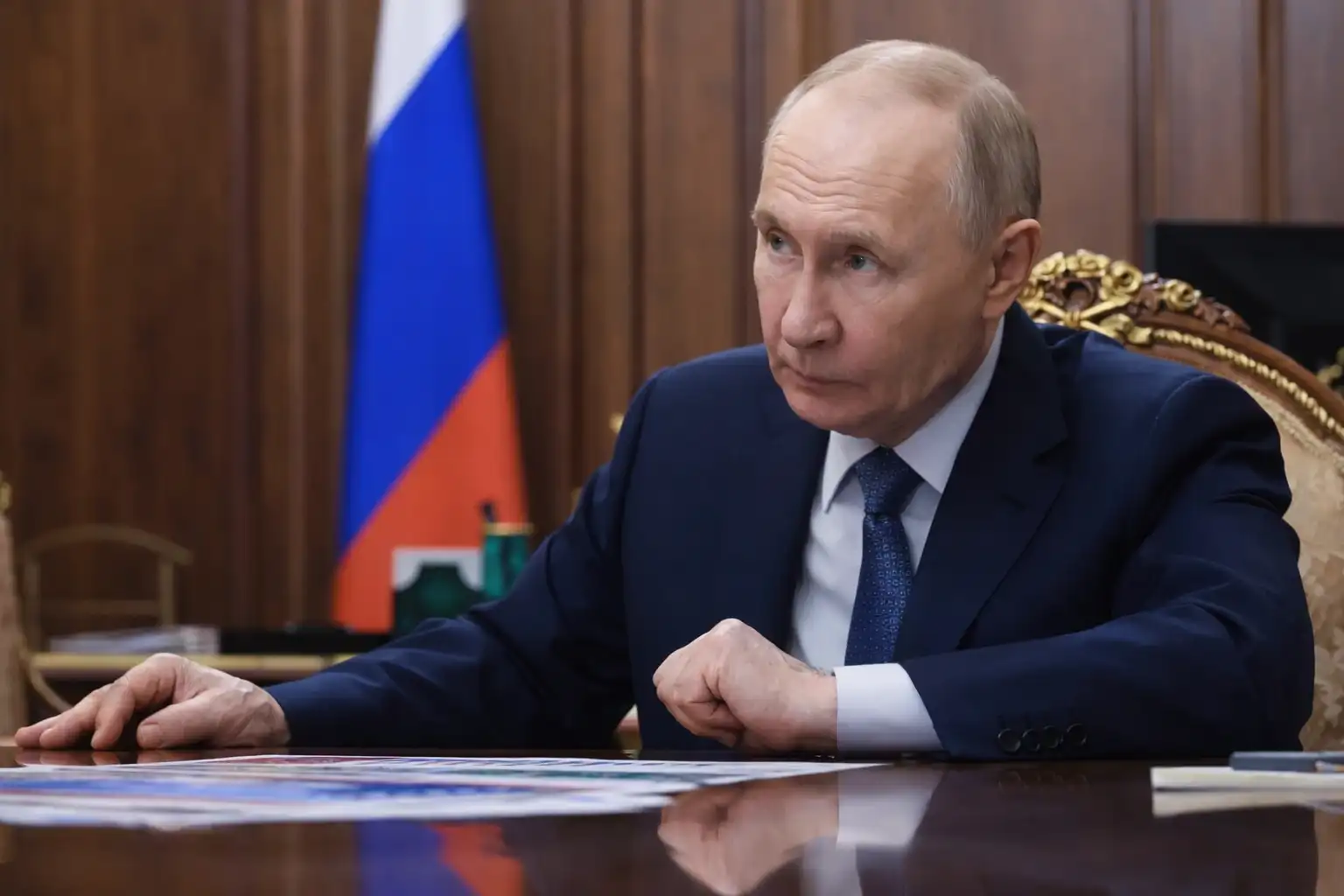
As the fourth anniversary of Russia's terrible invasion of Ukraine approaches, a top European spy chief has shared new information that is worrying people on the other side of the Atlantic. Kaupo Rosin, the head of Estonia's foreign intelligence agency, said some shocking things in an interview with reporters. He basically said that Vladimir Putin does not want a peaceful solution. The Russian commander, on the other hand, is sure that he can outsmart the US in any talks meant to stop the violence.
Putin's Mindset: No Real Interest in Ending the War
Rosin's analysis is based on what his team has learned by eavesdropping on conversations between Russians, but he hasn't said what happened at that intelligence meeting. It's interesting that Moscow sees Washington as its biggest enemy, no questions asked. Russian leaders are not talking about working with the US to find a solution. The main strategies are to stall, buy time, and wear everyone down. Putin still thinks he'll win a full military victory in Ukraine one day, no matter how long this mess lasts.
Estonia's Security Report and Russia's Long Game
This shocking news, which makes Russia look like a bomb about to go off, comes just before Estonia's yearly security report comes out. Moscow is actively strengthening its military, which raises the stakes, even though they don't expect a direct NATO conflict this year or next. If you look more closely, you'll see that Russian officials aren't sticking to their budget when it comes to their demands, even though they say they want to negotiate and reach a deal. It sounds like they are following a script that says, "Our way or the highway."
In the meantime, officials at the White House in the US strongly disagree with Rosin's opinion. An unnamed official there says that they have made "huge strides" in promoting peace, pointing to things like prisoner swaps that have been going on since last May. What do they say is their biggest win? In Abu Dhabi, the US, Ukraine, and Russia recently agreed to free more than 300 prisoners. They think this is proof that the end is near.
Trump's Deadlines and Clashing Narratives
Last week, Ukrainian President Volodymyr Zelenskyy added fuel to the fire by saying that the Trump administration has given both sides until June to reach an agreement. Trump is used to deadlines; he has missed a few in the past year without any problems. But this one makes it seem like he wants to move things along quickly, maybe to improve his image as the best negotiator.
Fiona Hill, who has studied Russia closely and advised Trump during his first term as president, gave her opinion. She told the AP that both Trump and Putin are holding on to their own myths: Trump as the peacekeeper and Putin as the hero who won in Ukraine. Even though reality says otherwise, neither of them wants to give up their story. Facts are just extras, like they are making their own movies.
The question is, why do American officials still say that Putin wants peace? Evidence from the ground level clearly shows the opposite. The Russians are still attacking. Vadym Filashkin, a local leader, said that glide bombs killed an 11-year-old girl and her mother in eastern Donetsk on Tuesday morning. Seven other people, including a 7-year-old girl, were hurt. At least five people were hurt in drone strikes in Ukraine overnight, including two kids and a toddler. The content is dark and doesn't say "we're ready to talk turkey."
Echo Chambers and Misinformation Feeding Putin's Confidence
Trump has openly complained about Putin's lackadaisical attitude during negotiations, even though he says that Russia wants to pull out. Rosin can't tell from her intelligence point of view what information the United States is using to back up that hope. Hill wonders if Trump is paying attention to the news that is coming to him or if he is relying too much on his aides, like Jared Kushner and special envoy Steve Witkoff. People say that Witkoff has gone to meetings with Putin without an interpreter from the State Department. This could mean that they are only hearing what they want to hear or are missing important details. If you want to, you can call it "selective listening on steroids."
Rosin says that Putin is very interested in and determined to take over Ukraine, no matter how much it costs Russia in money or lives. That obsession comes before everything else. The conflict could go on for years unless something huge happens that changes Russia's internal structure or the way the war is going, putting Putin's hold on power at risk. He is betting that he can outsmart everyone, even the US. There is a catch: Putin's own team isn't giving him the whole story. Rosin says that the boss man gets only good news because no one wants to tell bad news. People on the ground know how bad things are lower down—settlements that aren't really captured, that kind of thing. But by the time the information gets to Putin, it is perfect, with no mistakes and only wins. This echo chamber is a classic.
Hill says that yes-men only care about leaders and give them information that makes them feel good. Trump's team may be downplaying how bad Russia's economy is because of sanctions in order to put pressure on Putin. But if the Estonian intelligence is correct, Putin is willing to pay that price for his dream of Ukraine.
All of this makes it clear how hard it is to get to peace. It's easy to see why talks seem to be going nowhere: Putin is sticking to his guns, and American hopes are running into harsh reality. As the big powers fight for power, the cost to people keeps going up, leaving cities scarred and families broken. Don't underestimate Russia's long-term plans; Estonia's warning is a clear reminder of this.
Previous article
New START Expires: US-Russia Nuclear Limits End

Sarah Mitchell
Sarah Mitchell is an award-winning international correspondent with over 15 years of experience covering global affairs, diplomatic relations, and international conflicts. Based in Washington D.C., she has reported from over 40 countries and provides expert analysis on foreign policy and geopolitical developments.