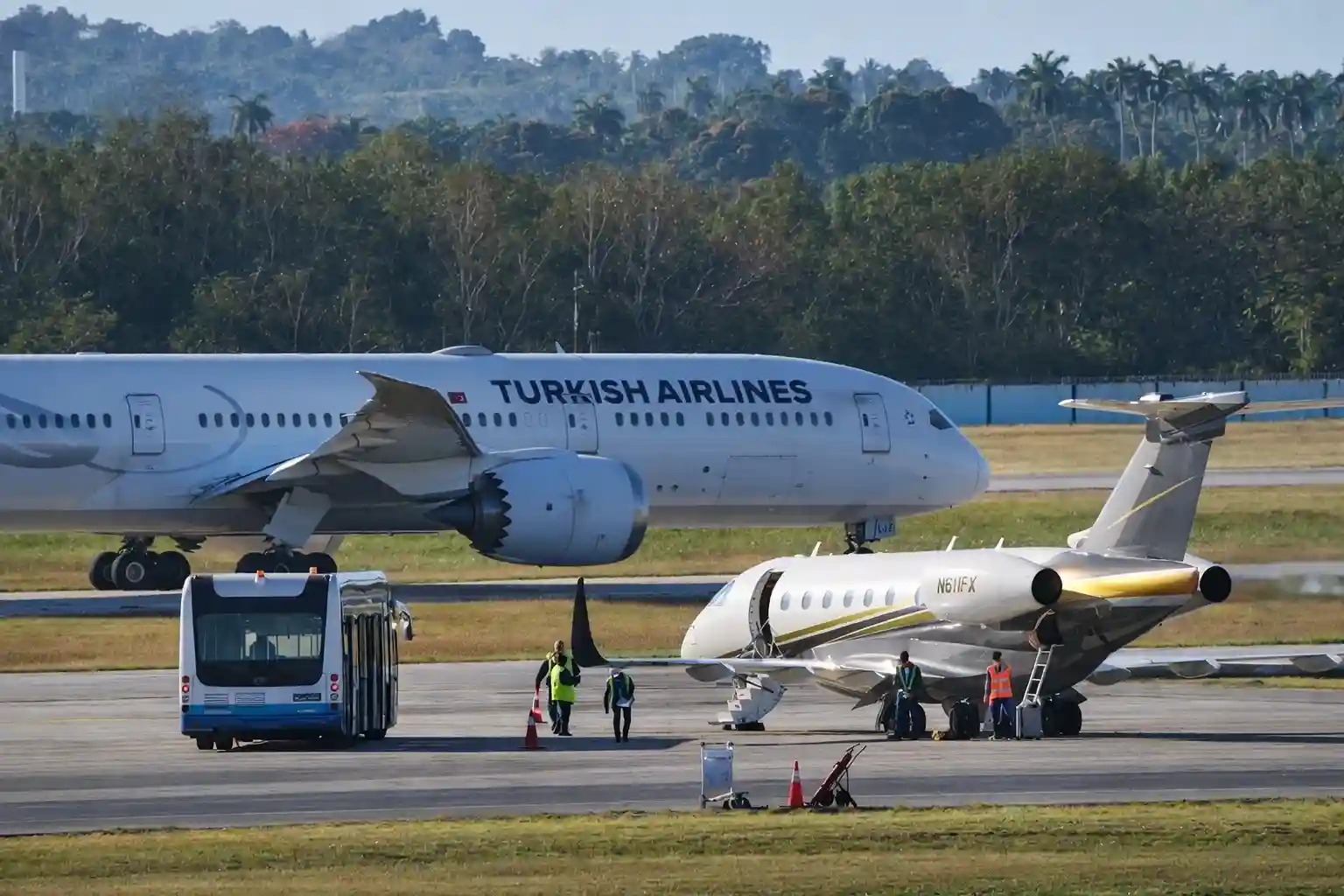
The government is having a hard time dealing with an electricity shortage that is getting worse and worse and is now affecting the skies. Things are getting very hard for Cuba in Havana. Recently, aviation officials told pilots and airlines that there isn't enough jet fuel available at nine major airports across the country, including José Martí International in the capital. At least on paper, this starts on Tuesday and goes on until March 11. All of this has to do with President Trump's stronger US blockade, which is making it harder for Cuba to get oil from countries like Mexico and Venezuela.
Aviation Warning Hits Tourism Lifeline Hard
Cuban officials sent out this very serious message late Sunday night. It might not be a total disaster for short flights from nearby places, but it's a huge pain in the ass for long flights coming from Canada or Russia, which are very important for the tourism industry. Tourism used to bring in more than $3 billion a year for Cuba, which helped their economy. Now that there isn't enough fuel, planes are flying quickly. After Air Canada suddenly canceled its flights to the island on Monday, some people are thinking about taking detours, like stopping in the Dominican Republic to refuel before going on to Havana. Fuel problems aren't new, but an official blanket warning like this is pretty crazy, even for Cuba, where crises seem to be the norm, according to a pilot friend of mine who flies similar routes. He remembered a time more than ten years ago when planes flying to Europe had to stop in the Bahamas to refuel. These days, Cancun and Santo Domingo are both options, but they cost more time, money, and trouble.
US Political Pressure and Sanctions Squeeze Supplies
What's happening here? Most of it is political power in the US. In late January, Trump signed an executive order that threatens to put tariffs on any country that sends oil to Cuba. Also, the island has been suffocated by sanctions for more than 60 years. Things got worse, though, when the US helped get rid of Venezuelan President Nicolás Maduro, which cut off Cuba's main oil ally. There hasn't been any help there because Mexico is also under a lot of stress. Cuba has always had to deal with limited resources, but this is a huge blow. This drop in airport fuel is just the latest step in the government's ongoing energy rationing.
Ground-Level Chaos and Echoes of the Past
The floor is even dirty. On Monday, more bad news came: Havana's public transportation system is basically broken, cultural events are being canceled, and banks are closing early. People are having a hard time living without enough food or medicine, going through 10-hour blackouts, and waiting in long lines for gas. A lot of people think of it as being like the "Special Period" of the 1990s, when Cuba was in economic ruin after the Soviet Union fell and aid stopped coming in. Back then, people grew their own food, rode bikes everywhere, and made it work. The government is now saying the same thing again by pushing back big events like the Havana International Book Fair this weekend, which is a big cultural event, and even changing the national baseball season to save electricity. You can tell it's serious because baseball is like a religion there.
Gas stations are also changing how they set their prices. They don't sell in Cuban pesos anymore; they only take dollars now, and each person can only buy 20 liters. That's not enough for a short drive—about five gallons. Last Friday, they said they would cut back on bus and train service, only providing the bare minimum. President Miguel Díaz-Canel admitted to the disaster on TV on Thursday in a two-hour speech and hinted that more difficult decisions would have to be made. He said very clearly that Cuba needs to adapt to what the US is doing, which is having a big effect.
This is mean to most Cubans. Picture waking up to a world with no electricity, gas lines that go around blocks, and no way to get to work because buses aren't running. Prices of food are going up, medicines are hard to find, and tourism, which used to be the only good thing, is going down. Hotels and resorts may see fewer tourists if flights keep being canceled. Russia has been sending some tourists, but that might not happen anymore because of gas problems. Canada is also important; their snowbirds love going to Cuban beaches to get away from the cold, but cancellations could hurt their business.
The most important question is how long this will last. It's not uncommon for officials to stay quiet in public, but it keeps everyone on edge. Will the gasoline notice still be in effect on March 11? What about the bigger problem? Is this the new normal, or could more international pressure be eased? Critics say that Trump's tough stance on Latin America is hurting regular Cubans by cutting off ties with governments he sees as bad.
Cuba has been able to get through storms like this in the past by being very determined and coming up with smart solutions. Wind and solar power have grown a little, but they won't be able to completely replace oil imports anytime soon. International allies may be able to help, but that would be hard because of the US's threats. People are hunkering down, the government is on the defensive, and airlines are changing their routes. It reminds us how geopolitics can change everyday life and turn a tropical paradise into a place where people have to make tough choices and there isn't enough of what they need. If you're going to Cuba for vacation, make sure to check the status of your flight again and maybe bring some patience. This island is under more stress than ever, even though it is strong.
Previous article
Starmer Faces Labour Crisis Over Epstein Ambassador Scandal

Sarah Mitchell
Sarah Mitchell is an award-winning international correspondent with over 15 years of experience covering global affairs, diplomatic relations, and international conflicts. Based in Washington D.C., she has reported from over 40 countries and provides expert analysis on foreign policy and geopolitical developments.